
Delftia tsuruhatensis TC1 based-intervention for interrupting malaria transmission in mosquitoes
A novel trial for evaluating alternative tools for control of vector-borne diseases
The DEFEND Project
DEFEND is an innovative trial approach designed to evaluate a new malaria control strategy using TC1 bacteria to block parasite development inside mosquitoes. The trials will take place in open-field settings in Burkina Faso and Senegal, focusing on mosquito-level outcomes rather than human infection rates.

Goal
DEFEND aims generate robust evidence on the efficacy of the TC1 intervention to support regulatory approval and accelerate the deployment of this innovative solution.

Global Collaboration
Results from our DEFEND project will establish TC1 as a key addition to the malaria control toolbox and we hope will be used by national malaria control programs and organizations alongside existing strategies to eliminate malaria

Worldwide Impact
The DEFEND trial could have potential for broad scale application beyond malaria to combat devastating vector-borne diseases, like leishmaniases and dengue.

Eradication
The TC1 intervention will complement existing strategies to combat malaria, a step closer to the goal of malaria eradication.
Our Partners
Collaborating with leading institutions and organizations to maximize our research impact and reach.

GSK is a global biopharma company with a purpose to unite science, technology, and talent to tackle diseases together.GSK's ambition is to positively impact the health of 2.5 billion people this decade, including at least 1.3 billion in lower-income countries.
Role in the project
DEFEND project is coordinated by GSK Global Health Medicines R&D, which leads the science and strategy across the consortium.

The Institut de Recherche en Sciences de la Santé (IRSS) is a leading public research institution based in Bobo-Dioulasso, Burkina Faso, renowned for its contributions to health research since its founding in 1997.
Role in the project
The Scientific Project Lead for the DEFEND Project is from IRSS, a leading center for malaria research in Burkina Faso and the region utilizing its field and semi-field infrastructure, including the Mosquito Sphere in Soumousso, to assess TC1's effectiveness in real-world settings.

Cheikh Anta Diop University (UCAD) is a prominent academic institution in Dakar, Senegal, with a strong emphasis on scientific research and development, especially in the area of vector-borne diseases.
Role in the project
UCAD, through its LEVP and led by Dr. El Hadji Amadou Niang, offers extensive expertise in vector ecology, genetics, genomics, and insecticide resistance for the DEFEND project.

IMPERIAL College London (ICL) is a world–leading university for science, technology, engineering, medicine and business (STEMB).
Role in the project
Imperial College London (ICL) will bring in key epidemiology, entomology and mathematical modelling expertise for trial design, statistics and predicting impact led by Prof. Thomas Churcher.
News & Publications
Stay updated with the latest developments, research findings, and publications from the DEFEND project.
Understanding Malaria
A comprehensive look at the global malaria challenge and why our research matters.



(*) Centers for Disease Control and Prevention. Malaria's impact worldwide [Internet]. April 1 2024 [cited 2025 Nov 25]. Available from: https://www.cdc.gov/malaria/php/impact/index.html
A New Way to Fight Malaria without harming the mosquito
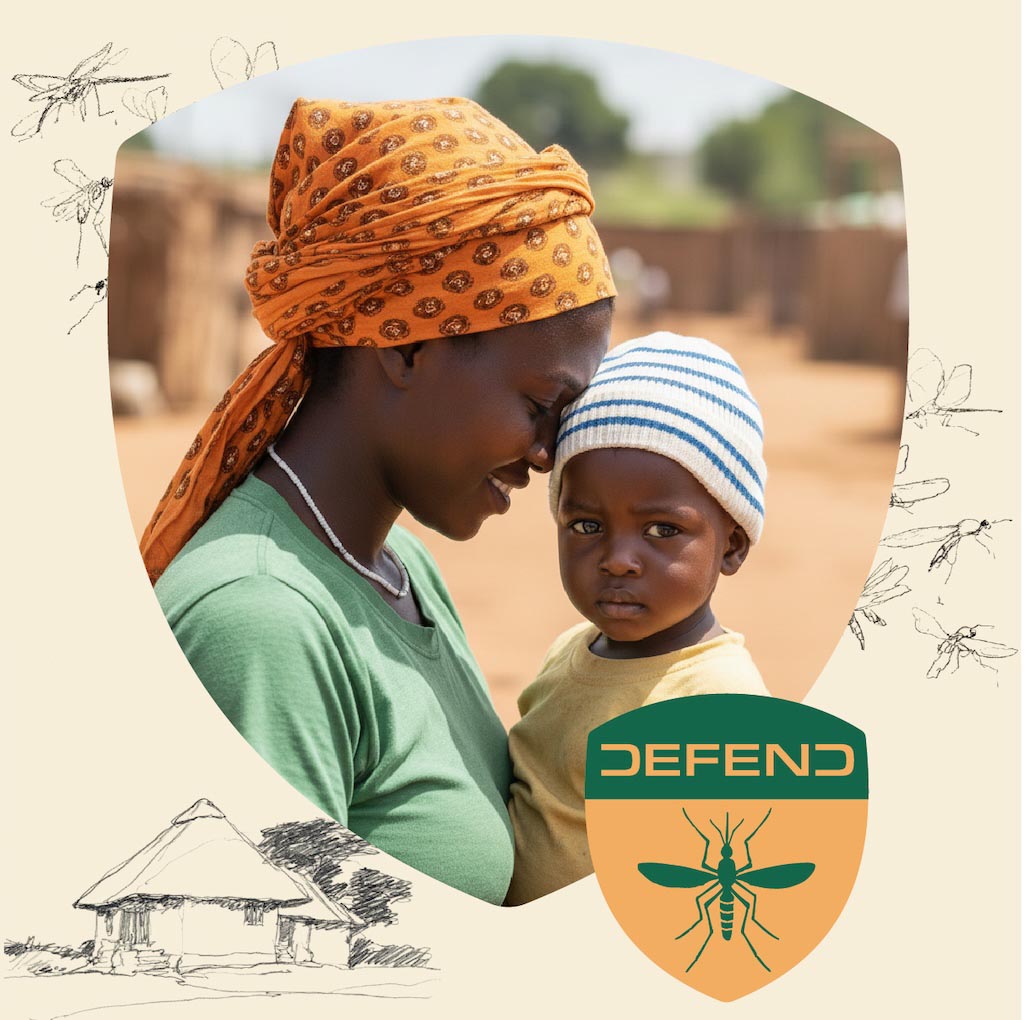
Malaria is one of the world’s deadliest diseases, affecting over 200 million people every year and causing more than 600,000 deaths, mostly in young children and remains a huge challenge, especially in Sub Saharan Africa. It spreads through mosquito bites, and while current tools like insecticides have helped reduce malaria in many areas, the fight against the disease is becoming harder. Widespread use of insecticide-based malaria control tools indoor residual sprays (IRS) or insecticide-Treated Nets (ITNs), have led to a rapid emergence of mosquito resistance making them less effective over time. To tackle this challenge, our team has developed an exciting new approach to fight malaria using a bacteria called Delftia tsuruhatensis TC1 (or simply TC1). TC1 produces a natural substance called Harmane, which stops the malaria parasite from growing inside mosquitoes. This means the mosquitoes can no longer carry the parasite and transmit the disease to humans. What’s unique about TC1 is that it doesn't kill or harm mosquitoes and hence they do not develop resistance like they do with chemical insecticides. This makes TC1 a powerful and sustainable solution for malaria control. We've conducted extensive studies in laboratories and semi-field environments to make sure TC1 is safe, effective, and can be produced in large amounts.
The results have been very promising, and now via this EDCTP3-funded DEFEND project we are preparing to test it in real-world settings in Burkina Faso and Senegal, two countries where malaria is a major problem.
Our approach
Testing TC1 in communities requires a new approach. Most insecticide-based vector control tools kill mosquitoes and are evaluated through large, expensive trials that measure how they impact entire populations. However, TC1 works differently—it blocks malaria at the stage where the parasite is developing inside the mosquito without killing it. For these types of non-insecticide-based tools we need to devise novel type of trials to demonstrate effectiveness. In the DEFEND project we are working on a new way to test how well TC1 works in real-world outdoor conditions in Burkina Faso and Senegal. We will deploy TC1 via sugar baits in various houses within communities and estimate reduction of malaria burden within an individual mosquito. The goal of this novel trial is to demonstrate the effectiveness within these communities and use this data in modelling studies to predict the public health impact of TC1 on malaria transmission.
Why DEFEND matters
This project is essential not only for malaria but also for other diseases spread by insects, like leishmaniasis and dengue. By creating new ways to test tools like TC1, we can speed up the process of getting them approved and deployed to the people who need them most. Malaria has been a global health challenge for generations, but with innovative solutions like TC1, there is real hope for eradicating this disease. With results from our DEFEND project, we hope that this new tool will be used by national malaria control programs and organizations alongside existing strategies to eliminate malaria. If successful, it could potentially help protect millions of lives and pave the way for safer, smarter tools to combat other vector-borne diseases in the future.
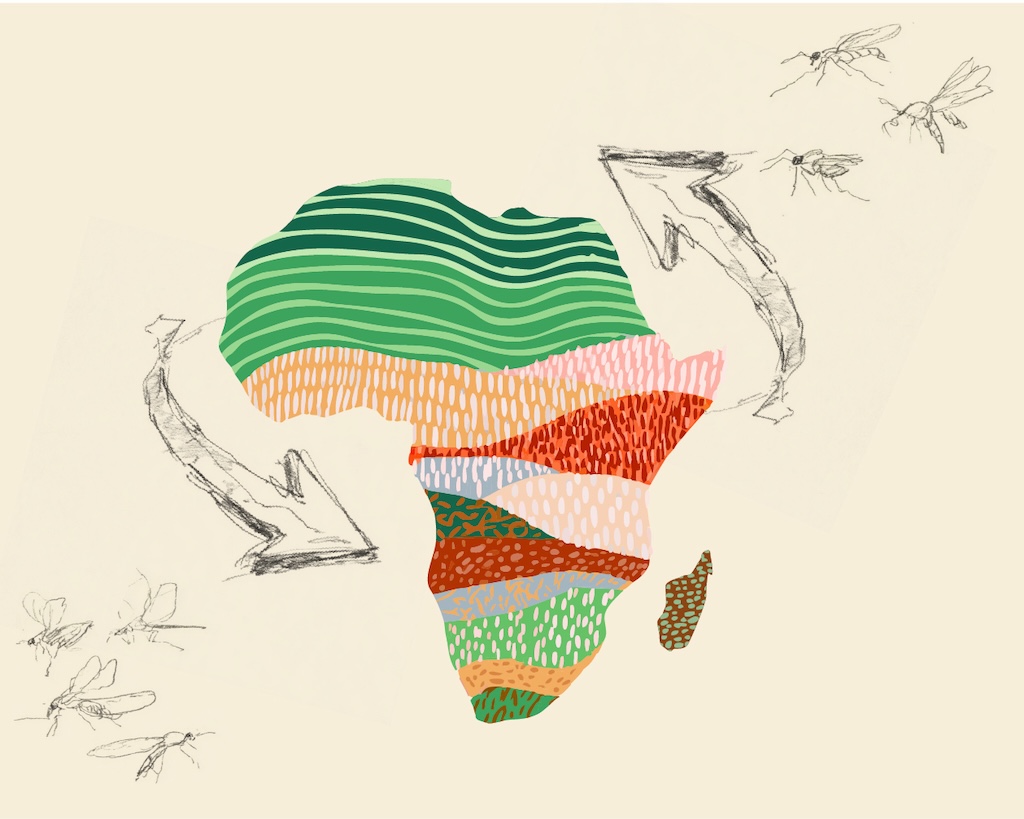
To achieve this main objective, the DEFEND consortium will work on six different work packages during the project duration as described below
.png)
National & Institutional approval
Determine and fulfill the regulatory pathways for national & institutional approval for open field testing.
.jpg)
Community Engagement
Community engagement (Operational & Community Acceptance).
.png)
Open field trial
Design, optimize & execute a TC1-tailored open field trial.
.png)
Testing prototype
Developability, optimization & efficacy testing of a preliminary prototype of a TC1-based Attractive Sugar Bait (ASB).
Project management
Project management, dissemination and exploitation activities.
.png)
Scientific leadership
Scientific Project Leader tasks, roles and responsibilities.
Impact Goal
The goal of this novel trial is to demonstrate the effectiveness within these communities and use this data in modelling studies to predict the public health impact of TC1 on malaria transmission. This project is essential not only for malaria but also for other diseases spread by insects, like leishmaniasis and dengue. Malaria has been a global health challenge for generations, but with innovative solutions like TC1, there is real hope for eradicating this disease.
Learn More About TC1 Research
Explore the scientific publications and articles that detail our groundbreaking TC1 research and its potential impact on malaria control.
Delftia tsuruhatensis TC1 symbiont suppresses malaria transmission by anopheline mosquitoes
Science
Read ArticleWe'd love to hear from you
Contact Information
Phone
Address
For specific research questions or collaboration opportunities, please include details about your institution and area of interest in your message.